
Cliff Villa · Curaçao Guide
Punda & Otrobanda
On Foot
History, food and stories across Willemstad's two great neighborhoods — from Kura Hulanda to the harbor at dusk.
Two neighborhoods,
one unforgettable city
Willemstad's historic center is divided into two districts: Punda, founded by the Dutch West India Company in 1634, and Otrobanda — "The Other Side" — which developed in 1707 across the harbor. The two neighborhoods are connected by the famous Queen Emma floating bridge, known locally as the "Swinging Old Lady."
Otrobanda was historically the working-class and cultural heart of the city, home to artisans, freed Afro-Curaçaoans and local markets, while Punda became the commercial center for international trade. This walk traces that history while introducing guests to local food, architecture and stories.
Start of Walk · Otrobanda
Kurá Hulanda
Village
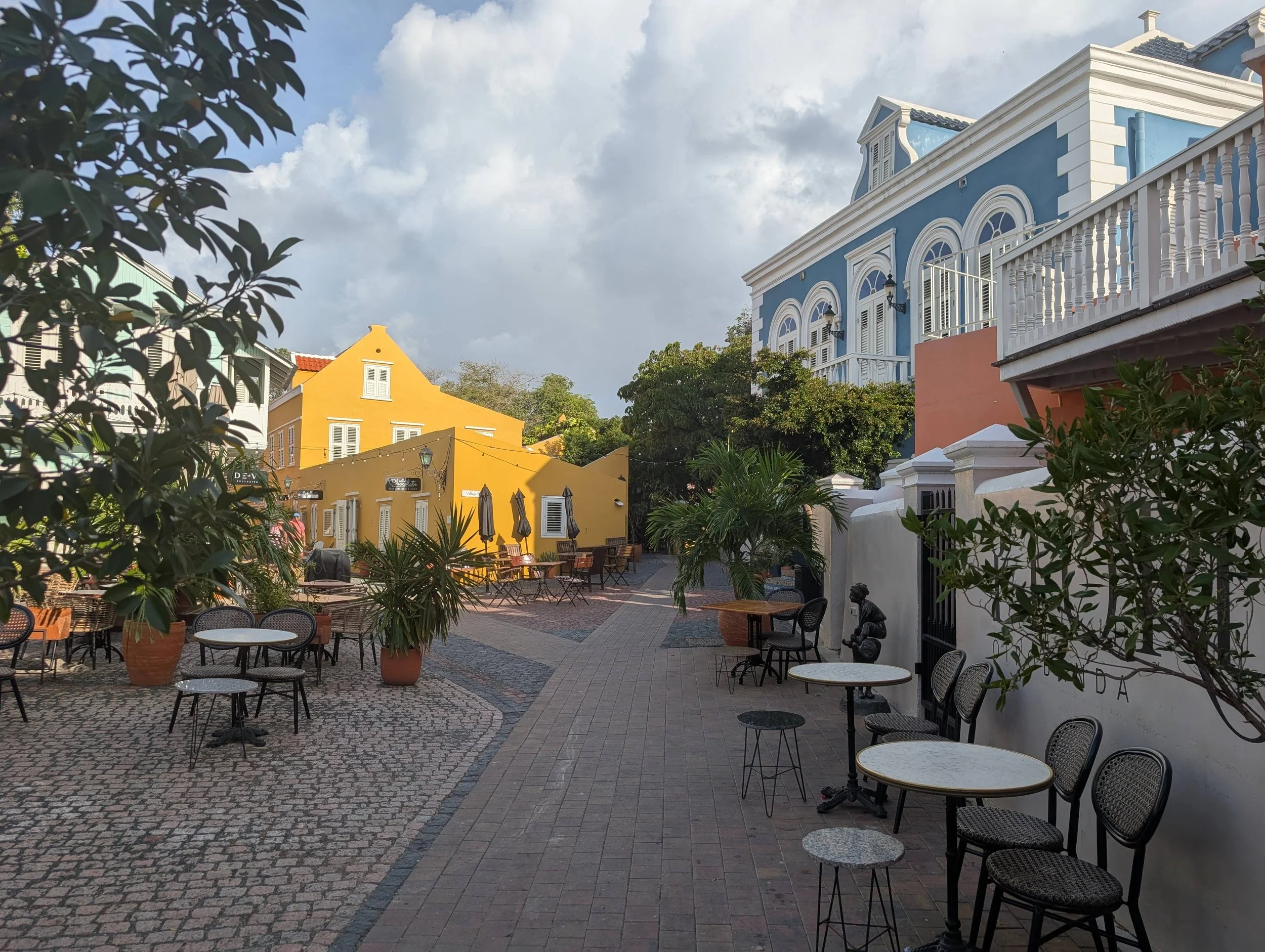
Begin in Kurá Hulanda, one of the most historically layered parts of Otrobanda. The neighborhood traces its origins to 1707, when plots were first granted on the west side of St. Anna Bay. Over time the area filled with mansions, courtyards and narrow streets.
By the 19th century it had become a vibrant residential district, but economic decline in the late 20th century left many buildings abandoned before large restoration efforts — led by Jacob Gelt Dekker — revived the area. Today the cobblestone lanes are filled with galleries, restaurants and small courtyards.

Walking East · Breedestraat
Otrobanda Streets
& Local Food
Walk east toward Breedestraat, the main street of Otrobanda. This neighborhood historically housed workers and free Afro-Curaçaoans and developed into a vibrant cultural center filled with churches, markets and music venues.
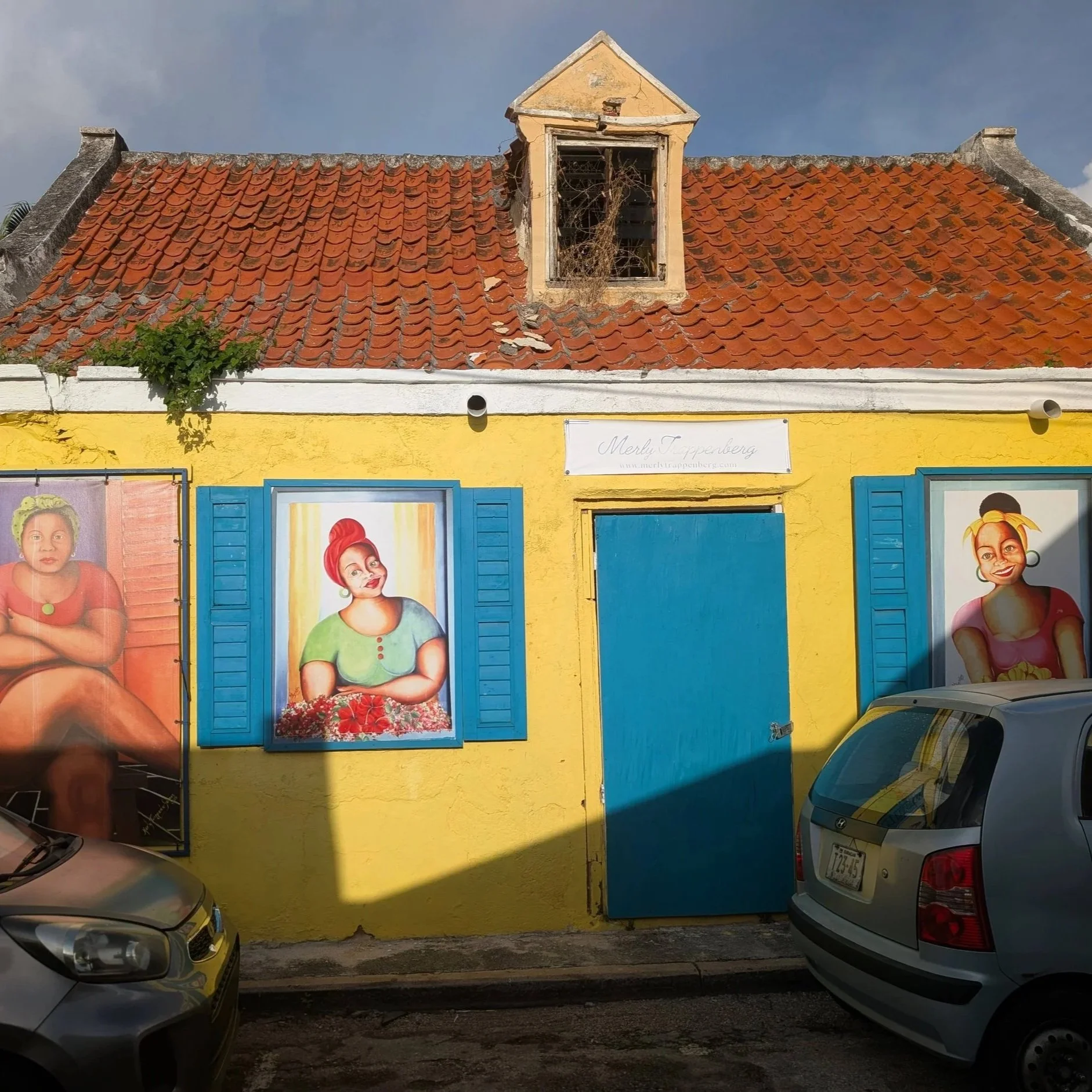
Look for colorful colonial houses, street murals and community art that tell the story of the island from the ground up. Every corner holds a story if you slow down long enough to read it.

Story Stop · Basilica of St. Anne
The Cannonball
Church
Continue toward the Basilica of St. Anne, often called the Cannonball Church. According to local history, a cannonball from an English naval attack in the early 19th century became embedded in the church wall — and remains visible today.
The story is a reminder of Curaçao's strategic role in Caribbean trade routes and the many naval conflicts that passed through its harbor. Pause here, look up, and find the cannonball for yourself.
Connecting the City
Queen Emma
Bridge
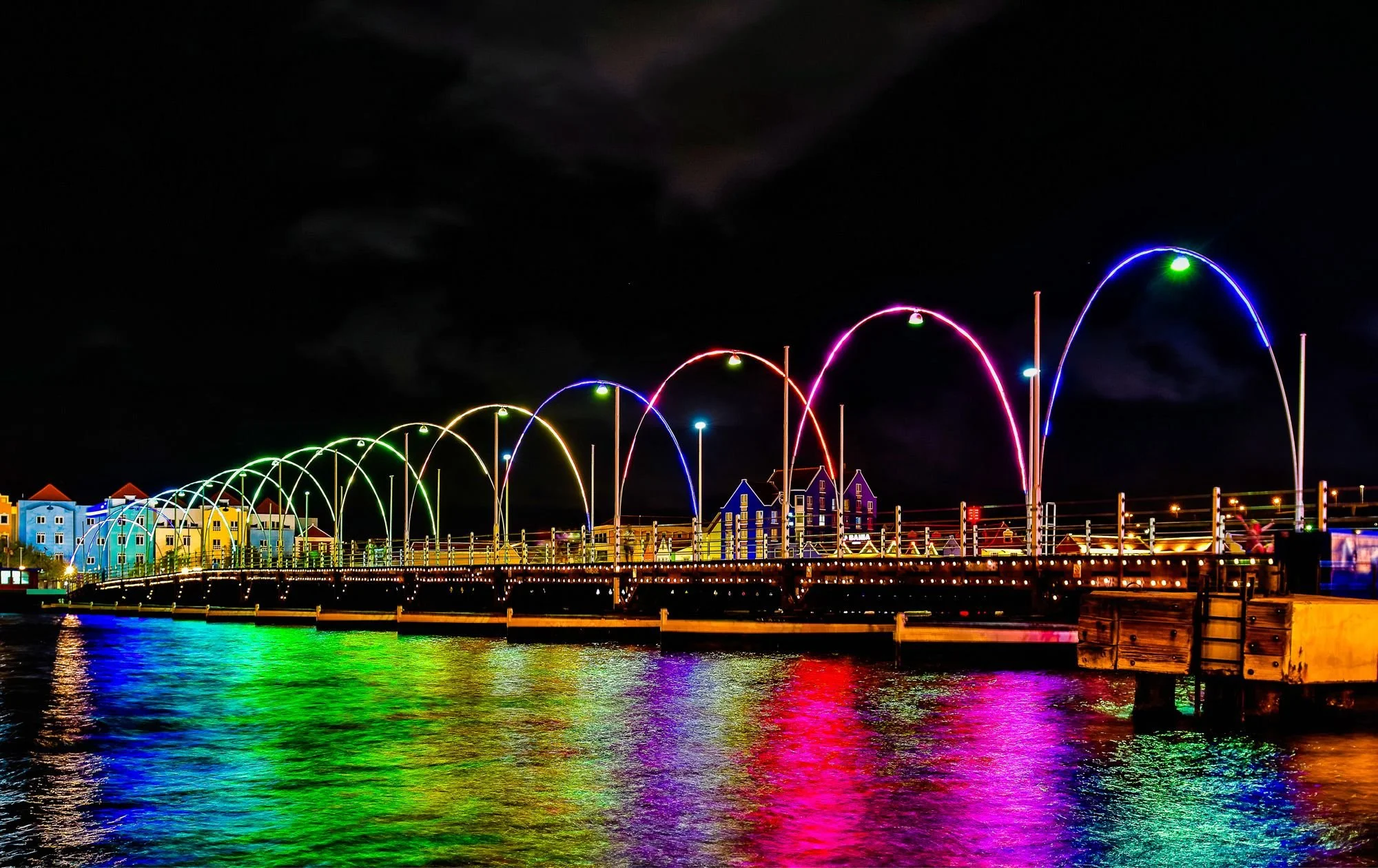
Walk toward the waterfront and cross the Queen Emma Bridge — a floating pontoon bridge that connects Otrobanda and Punda. Opened in 1888, it is one of the most recognizable landmarks in Curaçao.
The bridge swings open to allow ships to enter the harbor, temporarily separating the two halves of the city. Watch for that moment — it stops traffic on both sides and draws everyone to the rails.
The Trading City · Est. 1634
Punda
Waterfront
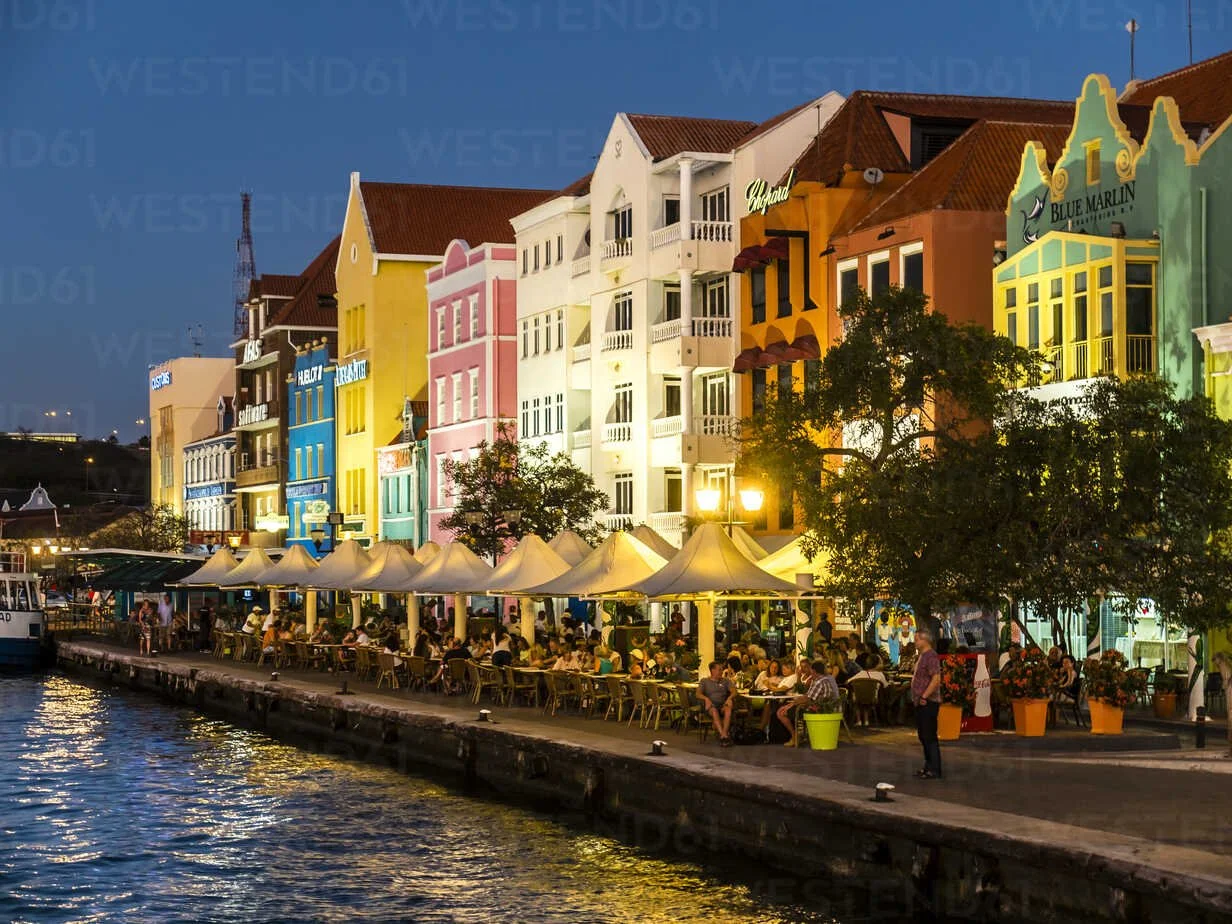
You are now in Punda, the original Dutch colonial settlement founded in 1634 after the Dutch captured the island from Spain. The harbor here became an important regional trading port, bringing merchants, sailors and cultures from Europe, Africa and the Americas.
Take your time with the famous Handelskade waterfront houses — their jewel-bright facades are one of the most photographed views in the Caribbean, and no photograph quite captures standing in front of them.
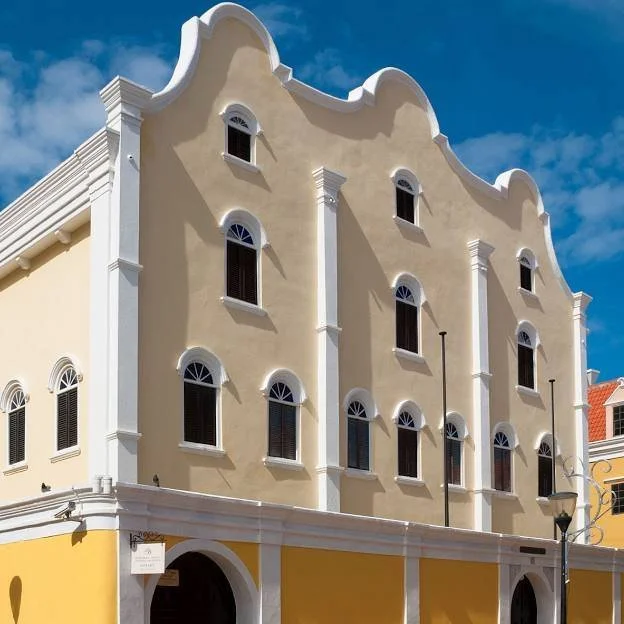
Built 1674 · Punda
Oldest Synagogue
in the Americas
Walk a few minutes inland to the Mikvé Israel-Emanuel Synagogue. Built in 1674 by Sephardic Jews who had migrated from Amsterdam and Brazil, it is the oldest continuously used synagogue in the Americas.
Notice the sand-covered floor — a Sephardic tradition symbolizing the desert journey. The adjacent museum documents Jewish life in Curaçao, and the architecture itself is a quiet masterpiece of Caribbean colonial building.
Your route through the city
Moments you won't want to miss
The restored colonial courtyards of Kurá Hulanda reward slow walkers. Duck through any archway — they open into private worlds of coral stone and bougainvillea.
A cannonball from an English naval attack in the early 19th century remains embedded in the wall of the Basilica of St. Anne. It has been there ever since.
Wait for the Queen Emma Bridge to swing open for a passing ship. The two halves of the city temporarily part — one of the most memorable scenes in the Caribbean.
The pastel Dutch-Caribbean facades along the waterfront are the visual signature of Willemstad. Golden hour light on these buildings is something no camera fully captures.
The synagogue's floor is covered in sand — a Sephardic tradition brought from the desert journeys of the Jewish diaspora. Simple, ancient, and profoundly moving.
End the walk with a drink overlooking the harbor while watching the bridge swing open for ships entering Willemstad at dusk. One of the most memorable scenes in the Caribbean.

Punda's Food Walk
& Sunset Drinks
Finish the tour by wandering through Punda's narrow streets. The neighborhood rewards the slow and the hungry. From traditional Curaçaoan dishes to waterfront cocktails, this is where the walk becomes a long, unhurried evening.
- Plasa Bieu for authentic Curaçaoan dishes
- Café terraces near the floating market
- Waterfront restaurants along Handelskade
- Local seafood and Dutch-Caribbean cafés
- Gelato and dessert shops in the narrow lanes
- Sunset cocktails overlooking the harbor
Stay at the
cliff's edge
Five bedrooms perched 40 feet above the Caribbean Sea. Your base for every adventure on the island.
Check Availability More Willemstad Guides